Tampilkan postingan dengan label Museum. Tampilkan semua postingan

Kamis, 23 Februari 2012

MUSEUM SATWA ( WILDLIFE MUSEUM )


Museum Satwa is a recreation area located in Batu, East Java. This tourist attraction is located about 20 km west of Malang and is now one of the new icon tourism in East Java. Wildlife Museum is part of Java Park 2. The museum presents the preserved animals and ancient fossils are imported from various countries across the continent, such as the Americas, Africa, Asia, Australia, Europe, Arctic, and Antarctica. In accordance with the objectives of the establishment that is as Ex-Situ Conservation Society Wildlife, then all the animals preserved in the Museum of Wildlife acquired not intentionally hunted but preserved from animals that have died. Moreover Wildlife Museum also presents a replica of ancient animals such as Apatosaurus, Tyrannosaurus Rex, Stegosaurus, Mammoth, and other replicas of ancient animals.


Museum Satwa Collectoins 


As the name implies, the collection is on display at the Museum of Wildlife is a good variety of animals that exist in the country or abroad and the collection of animals that are still existing and extinct animals. Wildlife on display is certainly not in a condition of life, but rather animals that have been preserved or reconstruction of the statue.

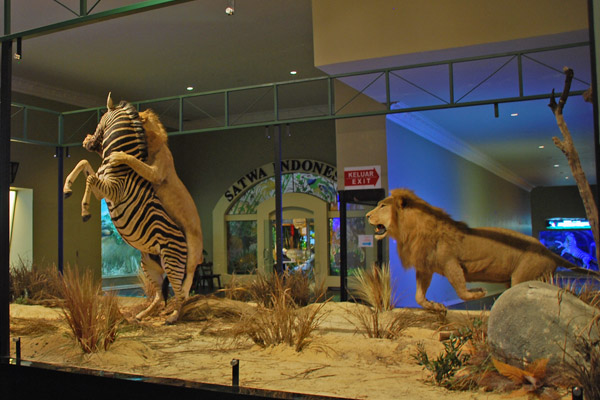
Preserved wildlife can be enjoyed in the form of a diorama. Within each there are dioramas of animals and their habitats. Habitat adapted to the environmental conditions of these animals. Various kinds of habitat that can be seen among other deserts, forests, snow, and other habitat. And wildlife habitat dioramas in it look real, so many visitors who take advantage of this opportunity to introduce different types of animals to their children. In addition, the diorama will also make the visitor can enjoy the beautiful scenery which is the habitat of wildlife. We will be as if brought to view in its original nature.


In addition to terrestrial animal diorama, diorama some fish. Various kinds of fish from around the world and live in a place different. Diorama fish unique look, because the diorama is able to show where the fish lives different. Fish habitat in rivers, lakes, swamps, shallow marine to marine fish habitat in the real presented. As if you were diving and enjoying various types of fish.


Source :
http://kumpulan.info/wisata/tempat-wisata/53-tempat-wisata/300-museum-satwa-batu-malang.html

http://touristattractionsgallery.com/jatim-park-2-modern-zoo-in-indonesia/museum-satwa-wildlife-museum-in-jatim-park-2-image-4

Sabtu, 11 Februari 2012

MUSEUM OF INDONESIA

Museum of Indonesia, is a museum of anthropology and ethnology, located in Taman Mini Indonesia Indah (TMII), Jakarta, Indonesia. The museum is concentrating on art and culture of various tribes that inhabit the archipelago and form a unitary Republic of Indonesia. The museum is decorated with Balinese architectural style varied Balinese carvings and sculptures are very delicate and beautiful. The museum is a collection of various arts, crafts, traditional and contemporary clothing from various regions in Indonesia. 

The museum is designed as part of the whole complex Taman Mini Indonesia Indah. Aims as a center of information and learning about the culture of Indonesia, as a "one stop to learn about Indonesia". Museum and the overall komplks TMII built and was inaugurated in 1975 on the initiative of Mrs. Tien Suharto.


The museum is decorated with various ornaments and statues of Bali and the Balinese architectural style is very beautiful. Some of the big gate and the temple style Paduraksa Bentar (split gate) typical of Bali, as well as some corner towers adorn the museum complex. The park and museum buildings take the story of Ramayana themes, such as a bridge to the Naga serpent-shaped main building and Wanara, troops of monkeys that builds bridges to Alengka.The main building consists of three floors which is based on the Balinese philosophy of Tri Hita Karana, the concept of morality that emphasizes the three aspects that can bring men to true happiness, namely: maintaining a harmonious relationship with God, with fellow human beings and with nature and the environment. 


Permanent showroom exhibiting a collection of the Museum of Indonesia is divided into three parts, each of which is located on three floors: 


First Floor 
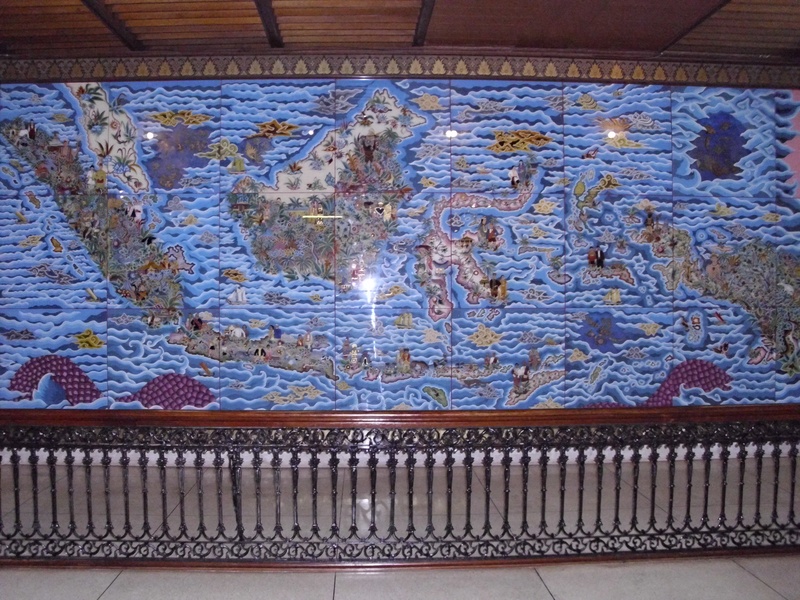
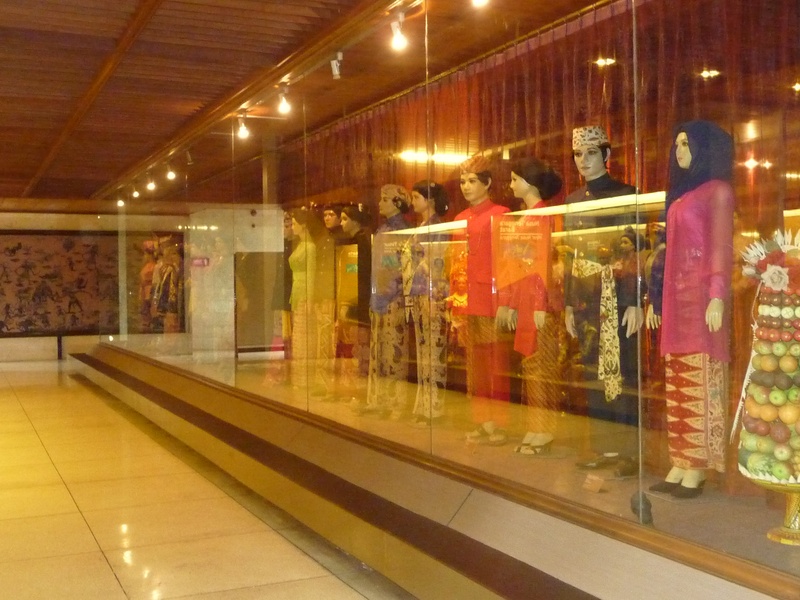
The first floor showroom theme Unity in Diversity (It varies, but one also). This section presents the traditional dress and wedding dress from 27 provinces in Indonesia (the Indonesian province from 1975 to 2000). This showroom also displays a variety of art unique to Indonesia, such as a wide range of dance, wayang and gamelan, as well as glass painting pictorial map of Indonesia. The exhibition showcases the cultural richness and diversity of Indonesia, which consists of a variety of languages, traditions, religions, cultures, and customs of the people of Indonesia. 


Second Floor
Humans and the Environment is the theme of the second-floor showroom. Aims to explain the interaction of nature and people of Indonesia with its environment. Exhibited a variety of miniature houses traditional houses, buildings of worship, granary, and the layout of buildings and living space of Indonesian society. For example, houses on stilts, houses built on trees or on the river, as well as trending and other traditional buildings.Dioramas of the traditional Indonesian houses are also on display, such as custom bridal chamber Palembang, Java community living room, and kitchen Batak society. Also exhibited a variety of everyday objects for the purposes of hunting, gathering food, and agricultural tools. Some dioramas featuring traditional ceremonies concerning the human life cycle, such as ceremonies Mitoni (nujuh monthly), the Land of Snow (ceremony for the baby), circumcision, Mapedes (Balinese tooth filing ceremony), Datuk inauguration ceremony, and Pelaminan Minangkabau. 


Third Floor 
Art and Craft is the theme of the third floor showroom. This room shows art and traditional crafts and contemporary Indonesian society. Traditional handicrafts such as songket fabric, Weaving and Batik on display, as well as craft objects from metals such as copper and brass engraving.Wood carving is very thorough and complex also displayed, such as the carving of Jepara (Central Java), Bali, Toraja, and Asmat. The main art on the third floor is a huge wooden carving shaped Kalpataru, the tree of life. Carving a tree as high as eight meters wide and four feet symbolizes the universe and contains five basic elements: sky, water, wind, earth and fire. This is a major art exhibition in the museum closes.

Selasa, 07 Februari 2012

MUSEUM BUNG KARNO TOMB

Bung Karno's tomb is located in the Village Bendogerit, Sanan wetan Blitar City District, East Java. Bung Karno's tomb, accompanied on either side of the Tomb of Father "R. Soekeni Sosrodihardjo" and the Tomb of Mother "Ida Aju Njoman Rai".

Entering the tomb was started from a great gate facing south. The main building called the Dome Tomb of Bung Karno. Dome-shaped tomb Bung Karno Joglo building, the building art form of Java that has been known long ago.


 Dome Tomb of Bung Karno is named Astono Mulyo. The tomb is placed above a black marble stone reads: Here is buried Bung Karno Proclaimer of Independence and First President of the Republic of Indonesia. Tongue connective Rakyat Indonesia.

Bung Karno Library is located in the south together with the Tomb complex on Jalan Bung Karno Kalasan no. 1 Blitar. Bung Karno Library is managed by the National Library through UPT Bung Karno Perpusta kaan (PPBK) in the City of Blitar.

Besides the library building, was filled with 2 PPBK artwork, the form of the Statue of Bung Karno, located in the middle of building a first floor, and wall reliefs contain Bung Karno journey that spans the pool from the library to the tomb.


Haul warning other than the commemoration of Bung Karno, Bung Karno dying day since July 21, 1970, also became a vehicle for teaching menteladani struggle and Bung Karno. The highlight of the celebration took place in the House of Gebang Palace Gebang or Ndalem Gebang an elderly residential home Bung Karno.


This palace is located on jl. Sultan Agung no. 69, Biltar. As the show haul Bung Karno from year to year than at the Palace Gebang event was also held at the Bung Karno tomb complex continuing sow flower show in the morning.